
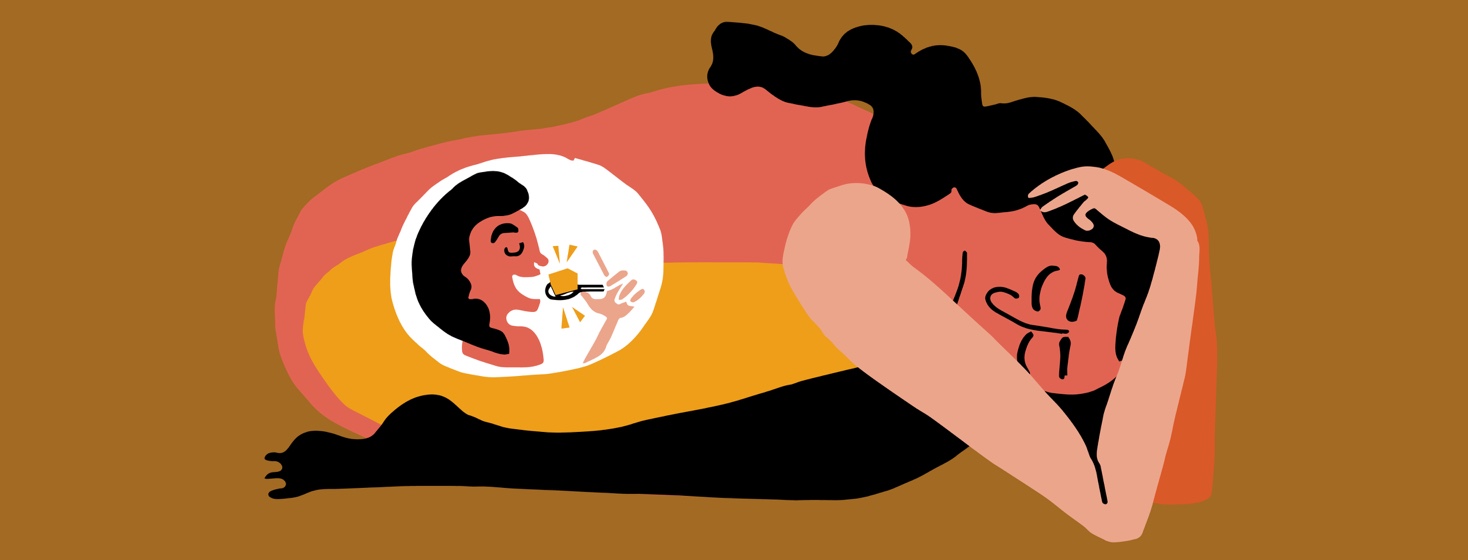
When ATTR Holds Your Stomach Hostage

When people hear transthyretin amyloid cardiomyopathy (ATTR-CM), they naturally think about the heart. I did too. But one thing this journey has taught me is that this disease doesn’t stay in one place. Some days, the hardest part of living with it has nothing to do with my heart at all — it’s my stomach.
How does ATTR affect the stomach?
I watched my dad go through this first, and now there are moments when I feel like I’m walking a road I already know too well.
I remember watching him sit down to eat, take a few bites, and then quietly push his plate away. At the time, I could see the frustration on his face, but I never fully understood what it felt like. Now I do.
Now I know what it’s like to look at food and not feel excitement, but hesitation.
- Will this sit right?
- Will I pay for this later?
- Will tonight end with me in the bathroom for hours?
That’s what this part of ATTR does. It takes something as simple and joyful as eating and turns it into something complicated.
The unpredictable daily struggle
Some days it’s the bloating and stomach pain that hit after only a few bites. Other days it’s nausea that makes food sound good in theory but impossible in reality. And then there are the days when it swings from diarrhea to constipation so fast it feels like my body has forgotten what normal is.

Those are the hardest days.
The days where I spend hours in the bathroom, knowing deep down this is part of the disease, and still wishing I could somehow fix it. I’ve tried medicines, routines, changing what I eat, eating smaller meals, hoping one of those things will finally be the answer. Sometimes something helps a little, but so often it feels like nothing really works the way I need it to.
That’s when it starts to feel like my stomach is holding me hostage.
The toll ATTR takes on your social life
It doesn’t just affect meals. It changes the way I think about every place I go.
A simple invitation to eat with friends or family now comes with a pause.
Before I even answer, my mind is already running through the questions.
- How will my stomach be that day?
- Will I be able to eat without feeling miserable later?
- If I just push food around on my plate, will I make them feel bad?
- Will they think I don’t like what they made?
- And the biggest question of all — will I pay for it later?
What used to be a simple yes now feels like a whole conversation in my mind.
Even going to someone’s house for dinner can carry this quiet stress. You want to enjoy the meal, the laughter, and the time together, but there’s always that thought in the back of your mind: what happens after I leave?
- Will the ride home be uncomfortable?
- Will I spend the rest of the night bloated or in pain?
- Will this one meal take tomorrow from me too?
That’s what people don’t always see.
They may see you eating less, moving food around your plate, or saying no to going out, but they don’t see the calculations behind it. They don’t see the hours that might follow or the way one meal can change the rest of your day.
Food used to be joy for me. I loved cooking for my family and feeding the people I love. There is something special about gathering around a table, sharing stories, and just being together.
Now there are times when the fear of how my stomach will react can steal some of that joy.
Finding joy in a new normal
Still, this journey has taught me how to adapt. Smaller meals. Slower bites. Learning what foods are safer. Giving myself grace when my body changes the plan.
And maybe that’s what this disease keeps teaching me over and over — to listen, to adjust, and to not force myself into what used to be normal.
Some days ATTR makes it feel like my stomach is calling the shots.
But even then, I remind myself that while this disease changes how I live, it does not get to take every good thing with it.
Joy may look different now.
Sometimes it comes in smaller meals.
Sometimes it comes in saying yes to the invitation, but only eating a few bites.
Sometimes it comes in choosing peace over pressure.
But it is still there.
Join the conversation